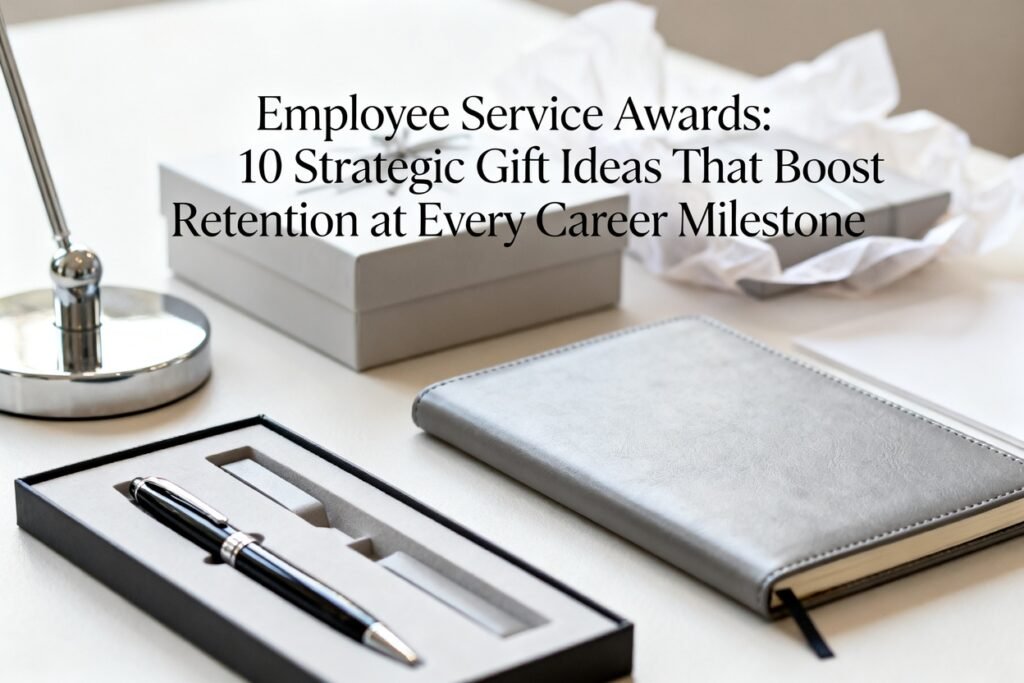
Employee Service Awards: 10 Strategic Gift Ideas That Boost Retention at Every Career Milestone
Why Service Awards Matter More Than Ever in 2026
The average cost of replacing an employee now exceeds 200% of their annual salary when you factor in recruitment, training, lost productivity, and institutional knowledge walking out the door. Yet companies that implement strategic employee service awards see turnover rates drop by 31% according to the Society for Human Resource Management. The math is simple: investing in recognition at key career milestones pays dividends far beyond the cost of the gift itself.
Service awards operate differently than onboarding gifts or performance bonuses. They mark time, loyalty, and shared history. When a Boston healthcare system redesigned its milestone program last year, three-year retention climbed from 64% to 78% within eighteen months. The difference wasn’t the gift budget—it was the intentionality behind what employees received and when.
The Business Case for Milestone Recognition
Modern service award programs extend well beyond the gold watch era. Today’s workforce expects personalization, meaning, and experiences that reflect company culture. A well-structured milestone gifting strategy serves multiple functions:
- Retention signaling: Employees who feel valued at anniversaries are 63% more likely to stay another two years.
- Cultural reinforcement: Awards ceremonies and recognition moments become touchstones that reinforce company values.
- Recruiting leverage: Visible service award programs signal to candidates that longevity is rewarded.
- Knowledge preservation: Recognized tenured employees become mentors and culture carriers.
The most effective programs align gift quality and significance with milestone importance. A one-year anniversary warrants acknowledgment; a twenty-year milestone demands celebration.
10 Employee Service Award Gift Ideas by Milestone
1. Year One: Premium Branded Apparel Kits
The first anniversary marks transition from new hire to established team member. A curated apparel package—think premium quarter-zip, branded joggers, and a high-quality tote—signals belonging without overwhelming. Companies like Social Imprints offer customizable apparel collections that feel like gifts rather than uniforms, especially when presentation includes a handwritten note from direct leadership.
2. Year Three: Elevated Tech Accessories
Three years represents commitment. Employees at this stage have proven their value and are often eyeing next steps. Premium tech gifts—wireless charging stations, noise-canceling earbuds, or high-end portable speakers—serve daily utility while feeling substantial. Avoid the $15 promotional earbuds; this milestone calls for recognizable quality that employees wouldn’t necessarily purchase themselves.
3. Year Five: The Experience Package
Five-year milestones deserve more than products. Leading companies now pair physical gifts with experiences: a weekend getaway voucher, dinner at a notable local restaurant, or tickets to a cultural event. A Philadelphia biotech firm pairs a sleek watch with a surprise “day off to enjoy it” voucher, creating a moment employees remember far longer than the watch alone.
4. Year Seven: Custom Home Office Upgrades
For hybrid and remote teams, seven-year gifts that enhance home workspaces deliver daily value. Consider ergonomic keyboard and mouse sets, premium desk organizers, or high-end monitor stands in branded packaging. The gift improves daily life while keeping company identity present in home office environments.
5. Year Ten: Luxury Timepieces or Heirloom Items
The decade mark remains the gold standard of service recognition. Luxury watches, custom-engraved jewelry, or fine leather goods carry weight. A New York financial services firm gifts bespoke leather portfolios embossed with the employee’s name and hire date—items that become desk centerpieces and conversation starters.
6. Year Fifteen: Family-Inclusive Recognition
Fifteen years means employees have often built families while building careers. Recognition that includes spouses and children—a family weekend package, annual amusement park passes, or premium gift baskets delivered to homes—acknowledges the life built alongside the work.
7. Year Twenty: Sabbaticals Paired with Premium Gifts
Twenty-year employees have earned rest. Many companies now combine extended paid sabbaticals with premium luggage sets, luxury watches, or significant experiences. The gift matters less than the time—the physical item simply commemorates the milestone.
8. Retirement: Legacy Recognition Packages
Retirement gifts should honor contribution and transition. Custom photo books documenting company history, charitable donations in the employee’s name, or mentorship program naming opportunities create lasting legacy. A mission-driven swag company can help design retirement packages that align retiree recognition with corporate social responsibility values.
9. Team Tenure Awards: Group Recognition
When entire teams reach collective milestones—say, a product team celebrating five years since launch—group gifts strengthen bonds. Custom team jackets, experience outings, or department-specific merchandise creates shared identity beyond individual awards.
10. Unexpected Milestones: Project Completion and Promotion Gifts
Beyond calendar anniversaries, strategic recognition at project completions or promotions reinforces achievement. A branded tech kit for new managers, premium notebooks for project leads, or celebration boxes delivered to homes for remote promotions keep recognition timely and relevant.
Designing a Cohesive Service Award Program
Isolated gifts underperform systematically designed programs. HR leaders building or refreshing milestone recognition should consider four structural elements:
Tiered Investment: Align budgets with milestone significance. One-year gifts might range $50-100; ten-year investments often exceed $500. The progression signals that loyalty compounds in value.
Choice and Personalization: Not every employee wants the same gift. Offer curated selections within tiers—perhaps three options at five years, five options at ten years. This respects individual preference while maintaining equity.
Presentation Rituals: How gifts are delivered matters as much as what’s given. Public acknowledgment at team meetings, executive-signed letters, and ceremony moments transform products into memories.
Manager Involvement: Direct supervisors should participate in selection or presentation. A gift chosen by a manager who knows their report’s interests carries more meaning than HR-automated distribution.
The Social Impact Dimension
Modern employees—particularly in mission-driven industries—increasingly value gifts that align with personal and corporate values. Social Imprints, a San Francisco-based corporate swag provider, employs underprivileged, at-risk, and formerly incarcerated individuals, giving every product a story beyond branding. When Boston-area tech companies partner with mission-driven vendors for service awards, they extend recognition impact: the gift honors the employee while supporting community transformation.
This approach resonates strongly with DEI-focused organizations and companies building employer brands around social responsibility. Service award gifts sourced from mission-driven suppliers reinforce company values at the exact moment employees are reflecting on their tenure.
Common Program Pitfalls to Avoid
Even well-funded service award programs fail when execution falls short. Watch for these frequent mistakes:
- Late delivery: An award arriving two months after the anniversary date feels like an afterthought.
- Generic messaging: Form letters without personalization undermine investment in premium gifts.
- Inconsistent application: Some departments celebrating lavishly while others receive quiet emails breeds resentment.
- Budget erosion: Companies that cut service award budgets during downturns signal that loyalty matters less than quarterly results.
Successful programs protect recognition budgets even when other spending contracts. The message sent by maintaining milestone celebrations during challenging periods resonates for years.
Measuring Program Impact
Service award programs should generate measurable returns. Track these metrics quarterly:
- Retention rates at key milestones (one, three, five years)
- Employee engagement scores on recognition questions
- Participation rates in award ceremonies
- Qualitative feedback on gift satisfaction
A Boston professional services firm discovered through survey data that employees valued public recognition more than gift value at the three-year mark—leading them to shift investment toward ceremony events while moderating product costs. Data-driven program evolution keeps recognition relevant as workforce expectations shift.
Frequently Asked Questions
How much should companies budget per employee for service awards?
Budgets typically range from $50-100 for one-year milestones up to $500+ for ten-year awards, with progression in between. Total annual spend averages $25-75 per employee across all milestones, depending on company size and industry benchmarks.
Should service awards be the same for all employees at a given milestone?
Equity doesn’t require identical gifts. Most successful programs offer a curated selection at each tier—employees choose from three to five options of equal value, maintaining fairness while respecting individual preference.
How do service awards differ from performance bonuses?
Service awards recognize time and loyalty rather than output. They’re inclusive of all employees reaching milestones, not contingent on role or performance ratings, and designed to build culture rather than drive specific behaviors.