Wellness Onboarding Kits: The Complete 2026 Guide to Stress-Reducing Welcome Gifts That Improve New-Hire Retention
Why Forward-Thinking HR Teams Are Prioritizing Mental Wellness in New Employee Welcome Packages
Seventy percent of new employees decide whether a job meets their expectations within their first month—and anxiety is the single biggest predictor of early attrition. This isn’t speculation. It’s data from the Society for Human Resource Management’s 2025 onboarding study, which tracked 12,000 hires across industries and found that employees who received thoughtfully designed welcome packages reported 34% lower first-quarter turnover than those who received standard-issue branded pens and notebooks.
The difference wasn’t the logo on the gear. It was whether the gift acknowledged the human experience of starting a new job. Enter wellness onboarding kits: curated collections of stress-reducing, comfort-focused items designed to signal that an organization values employee wellbeing from day one.
For HR leaders navigating competitive talent markets in San Francisco, New York, and Boston, wellness-first onboarding isn’t a perk. It’s a retention strategy.
What Defines a Wellness Onboarding Kit?
A wellness onboarding kit differs from traditional welcome boxes in both intention and execution. Standard new-hire packages prioritize brand visibility: logo-dense apparel, office supplies, and maybe a company-branded water bottle. There’s nothing wrong with these items, but they serve the company’s identity first and the employee’s experience second.
Wellness-first kits flip that equation. They start with the question: What does a new employee actually need to feel grounded, supported, and confident during their transition?
The answer varies by company culture, but effective wellness onboarding kits typically include:
- Stress-relief tools: Fidget items, adult coloring books, or meditation timers
- Comfort enhancers: Premium blankets, ergonomic cushions, or aromatherapy candles
- Mindfulness resources: Guided journal prompts, gratitude cards, or subscription trial codes for meditation apps
- Self-care staples: Lip balm, hand cream, tea samplers, or bath products in gender-neutral packaging
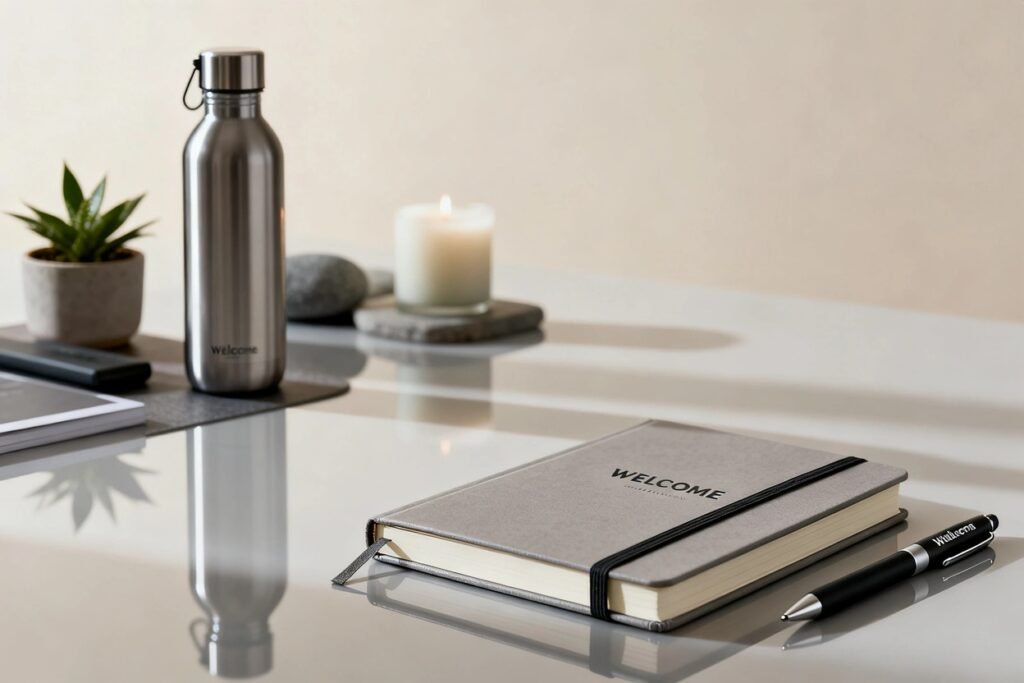
- Hydration and nutrition: High-quality drinkware paired with herbal tea selections or healthy snack packs
The company logo appears, but it doesn’t dominate. These kits feel like gifts, not marketing materials.
The Business Case: ROI of Wellness-Focused Onboarding
Gallup’s 2025 State of the American Workplace report found that employees who strongly agree their organization cares about their wellbeing are 69% less likely to search for a new job. That correlation doesn’t require expensive initiatives. It requires consistent signals—starting before day one.
Wellness onboarding kits function as tangible evidence of company values. When a new hire opens a box containing a weighted eye mask, a mindfulness journal, and a handwritten note from their manager, they receive a clear message: We see you as a whole person, not just a role.
The financial implications stack quickly. According to the Work Institute’s 2025 Retention Report, replacing a salaried employee costs 33-50% of their annual compensation in recruiting, training, and lost productivity. A $75-150 wellness kit that prevents even one early departure delivers immediate ROI.
Case Study: San Francisco Tech Startup Reduces 90-Day Attrition by 28%
When Veridian Health, a 180-employee digital health company in SoMa, redesigned their onboarding experience in late 2024, they replaced standard welcome boxes with curated wellness kits. Each package included a bamboo desk organizer, organic tea sampler, stainless steel tumbler, guided journal, and a QR code linking to the company’s mental health resources portal.
The results after 12 months: 90-day turnover dropped from 18% to 13%, and new-hire survey scores on the question “I feel supported by this organization” rose from 3.2 to 4.4 out of 5. Total kit cost per employee: $92.
Wellness Kit Categories for Different Work Environments
Remote and Hybrid Teams
Distributed employees face unique onboarding challenges: isolation, tech fatigue, and difficulty reading company culture through a screen. Wellness kits for remote hires should address these specific stressors.
Effective items include:
- Blue-light-blocking glasses with subtle branding
- Desk plants or succulent kits (proven to reduce workplace stress)
- Cozy apparel like premium hoodies or fuzzy socks
- Herbal tea collections designed for afternoon focus
- Guided digital detox cards with screen-free activity suggestions
Shipping logistics matter more for remote kits. Working with international swag fulfillment partners ensures consistent delivery experiences whether a new hire is in Omaha or Singapore.
In-Office and Onsite Teams
Employees returning to shared workspaces often navigate open-plan distractions, commuting stress, and re-socialization anxiety. Office-focused wellness kits can create small personal sanctuaries within busy environments.
Consider including:
- Noise-canceling earplug sets or desk-top white noise machines
- Aromatherapy diffusers with shared-space-appropriate scents
- Ergonomic seat cushions or lumbar supports
- Insulated food containers that encourage healthy meal habits
- Desktop zen gardens or stress-relief sand trays
High-Stress Industries: Healthcare, Finance, and Startups
Some roles come with elevated baseline stress. Healthcare workers, financial analysts, and early-stage startup employees all face demanding environments where burnout risk runs high.
Wellness onboarding kits for these populations should acknowledge reality. Rather than generic “relax” messaging, include practical tools:
- Hand creams and sanitizers for healthcare workers (with genuinely restorative formulations, not branded sanitizer dispensers)
- Portable massage rollers or stress balls for desk-bound finance teams
- High-quality coffee or matcha kits for startup teams pulling late nights
- Recovery-focused items: cooling eye masks, magnesium soak packets, or sleep-support tea blends
Designing Wellness Swag That Doesn’t Feel Performative
There’s a fine line between thoughtful and tone-deaf. A stress ball branded with “Resilience!” lands differently than a set of premium bath salts accompanied by a card reading, “We know this work is demanding. Take care of yourself.”
Common Mistakes to Avoid
- Overbranding: Logos should be subtle. A small tag inside a hoodie reads differently than a logo stretched across the chest.
- Generic wellness content: Stock motivational quotes feel impersonal. Curated book recommendations, local wellness studio partnerships, or manager-written notes create connection.
- Ignoring accessibility: Not every employee can use every wellness item. Offer options or include universally accessible resources alongside physical gifts.
- One-size-fits-all timing: Some employees appreciate immediate delivery. Others prefer their kit arriving after week one, once they’ve settled into their workspace.
Working With Mission-Aligned Vendors
The vendor you choose tells a story too. HR teams seeking authentic wellness messaging often partner with companies that embody those values. Social Imprints, a San Francisco-based provider, has built their business on employing individuals from underserved populations—including formerly incarcerated and at-risk community members. Their mission-driven approach resonates with organizations that view corporate social responsibility as more than a bullet point.
When a wellness kit comes from a company whose mission aligns with employee care, the gift carries additional meaning. It demonstrates that the organization considers supply chain ethics, not just unit cost.
Wellness Onboarding Kit Ideas by Budget Tier
Essential Tier ($40-75 per kit)
- Premium journal with prompts for new employees
- Herbal tea sampler (5-8 varieties)
- Double-wall insulated tumbler
- Calming essential oil roller or solid perfume
- Welcome card with mental health resource list
Elevated Tier ($75-150 per kit)
- All essential items, upgraded
- Bamboo desk organizer or charging station
- Weighted lap blanket or premium throw
- Subscription trial code (meditation app, wellness box service, or therapy platform)
- Curated book on professional growth or mindfulness
Premium Tier ($150-300 per kit)
- All elevated items, plus:
- High-end noise-canceling headphones or earbuds
- Smart water bottle with hydration tracking
- Personalized wellness consultation or coaching session
- Home spa collection: bath tray, candles, soak, face masks
- Local wellness experience gift card (massage, yoga studio, meditation class)
Integrating Wellness Kits Into a Broader Onboarding Strategy
A wellness kit alone won’t solve retention challenges. It works best as one element in a comprehensive onboarding experience that includes:
- Pre-boarding communication that sets expectations and reduces first-day anxiety
- Structured manager check-ins during weeks one, two, and four
- Buddy or mentor pairing for social integration
- Clear performance expectations with realistic timelines
- Visible pathways for feedback and questions
When the kit arrives in this context, it reinforces a consistent message: You belong here, and we’re invested in your success.
Some companies time kit delivery strategically. Sending a package to arrive the Friday before a Monday start date gives new hires something tangible to hold over the weekend, transforming Sunday anxiety into anticipation. Others prefer day-one delivery, creating an unboxing experience to share with their new team.
Measuring Effectiveness: Metrics That Matter
Wellness onboarding kits generate soft outcomes (feeling supported, perceiving company values) and hard metrics. Track these indicators to assess impact:
- 30/60/90-day retention rates compared to pre-kit baselines
- New-hire survey scores on belonging, support, and wellbeing questions
- Kit item usage rates (gathered via optional follow-up survey)
- Qualitative feedback during onboarding check-ins
- Referral rates from recently hired employees
Six months of data usually reveals patterns. If 80% of new hires mention the tea sampler but never open the journal, adjust future kits. If retention holds steady but qualitative feedback celebrates the welcome box, you’ve found a winning element worth preserving.
Industry-Specific Considerations
Healthcare and Life Sciences
Hospital systems, biotech firms, and healthcare startups face strict gifting policies and practical constraints. Scrub-compatible items, shift-friendly wellness tools, and hospital-approved aromatherapy options (no open flames, limited scents) show awareness of the environment. For teams navigating patient care realities, a thoughtfully curated wellness kit acknowledges that their work carries weight.
Finance and Legal
Conservative industries often prefer understated wellness messaging. Premium materials (leather journals, ceramic drinkware, cashmere throws) communicate quality without sounding “woo-woo.” Time-management tools and stress-relief items that can live discreetly on a desk serve professionals navigating client-facing roles.
Technology and Startups
Tech companies have embraced wellness culture more visibly, creating space for more experimental kits. Sleep masks, meditation cushions, desk yoga cards, and recovery supplements all appear in tech onboarding packages. The key is authenticity: startups that preach work-life balance while demanding 60-hour weeks will see wellness kits land as cynical gestures.
Sustainability and Wellness: A Natural Pairing
Employees who value personal wellness often value planetary wellness too. Eco-conscious packaging, sustainable materials, and ethically sourced products strengthen the wellness message. Bamboo, organic cotton, recycled polyester, and plastic-free packaging signal alignment with the whole-person, whole-world values many employees hold.
For HR teams prioritizing sustainability, eco-friendly promo products offer wellness-focused options that don’t compromise on environmental values. Reusable tea infusers, organic cotton eye masks, and plant-based skincare items deliver wellness benefits with lower environmental footprints.
The Future of Wellness Onboarding
As burnout rates remain elevated across industries and mental health conversations continue destigmatizing, wellness onboarding kits will evolve from differentiator to expectation. HR teams that invest now in thoughtful, research-informed packages will find themselves ahead of a curve that’s already bending toward holistic employee care.
The best wellness kits don’t solve every new-hire challenge. They simply demonstrate, in tangible form, that an organization sees the human behind the role—and that visibility matters more than any logo ever could.
Frequently Asked Questions
How much should a company budget for wellness onboarding kits?
Most organizations allocate $50-150 per kit, with premium options reaching $300 for executive roles or high-stakes positions. The ROI typically justifies the investment: a single prevented early departure saves 33-50% of that employee’s annual salary in replacement costs.
Should wellness onboarding kits be sent before or after a new hire’s start date?
Either timing works, depending on company culture. Pre-start delivery (arriving the Friday before a Monday start) reduces weekend anxiety and builds anticipation. Day-one delivery creates a shared unboxing experience with teammates.
Are wellness onboarding kits appropriate for all industries?
Yes, with tailoring. Healthcare settings require infection-control considerations. Finance and legal industries often prefer understated, premium materials over trendy wellness items. Tech and creative sectors tend toward more experimental kits. The core principle—acknowledging the human experience of starting a new job—translates across industries.