From the Factory Floor to the Trade Show Floor: A Case Study in Manufacturing Corporate Swag Strategy
For decades, the manufacturing sector viewed corporate swag as an afterthought—a line item for cheap pens and flimsy t-shirts destined for the back of a closet. But as competition for talent intensifies and brand differentiation becomes paramount, forward-thinking industrial companies are discovering the strategic power of high-quality, purposeful branded merchandise. This is the story of how one company transformed its approach, turning a cost center into a powerful engine for employee engagement, lead generation, and talent acquisition.
Let’s examine ‘Apex Industrial,’ a composite mid-sized American manufacturer of precision components for the aerospace and automotive industries. With a brand built on quality, durability, and safety, their existing promotional products were sending the wrong message. The disconnect was palpable: a company selling million-dollar CNC-machined parts was handing out 10-cent pens at trade shows.
The Challenge: A Disconnected and Ineffective Swag Strategy
Apex Industrial’s leadership identified three critical areas where their branded merchandise was failing to deliver returns:
- Employee Engagement & Safety: Internal programs rewarding safety milestones and employee tenure were met with indifference. A generic gift card or a low-quality polo shirt did little to make employees on the factory floor feel valued or reinforce the company’s commitment to their well-being.
- Trade Show Presence: At major industry events like FABTECH and IMTS, Apex’s booth giveaways (stress balls, keychains) were lost in a sea of similar, forgettable items. They failed to attract high-value prospects or create a memorable brand interaction that reflected their engineering prowess.
- Talent Acquisition: In the tight labor market for skilled machinists and engineers, their career fair swag was underperforming. A simple logoed t-shirt didn’t resonate with a new generation of talent that values authenticity, quality, and purpose.
“Our old swag didn’t reflect who we are,” noted Apex’s fictional Head of Marketing. “We promise precision and durability to our customers, but we were handing out merchandise that felt cheap and disposable. It was a brand contradiction we had to solve.”
The Strategic Pivot: Partnering for Purpose and Quality
Recognizing the need for a comprehensive overhaul, Apex sought a strategic partner, not just a vendor. They reviewed proposals from several firms, including large-scale providers like Corporate Imaging Concepts and online platforms like swag.com. While these vendors offered vast catalogs, Apex was looking for something more: a consultative approach and a story that aligned with their core values.
Their search led them to SocialImprints.com, a San Francisco-based, mission-driven company. The choice was deliberate and transformational for several reasons:
- Mission Alignment: As a company that deeply valued its workforce, Apex was inspired by Social Imprints’ mission to provide professional opportunities to at-risk individuals, including the formerly incarcerated. This partnership allowed Apex to embed a powerful corporate social responsibility (CSR) narrative into every piece of merchandise.
- Consultative Strategy: Social Imprints didn’t just present a catalog. Their team invested time to understand Apex’s unique challenges in the manufacturing space—from the harsh environment of a factory floor to the sophisticated audience at an engineering trade show.
- Commitment to Quality: Apex needed functional, durable items. Social Imprints demonstrated a robust global sourcing network and impeccable decoration quality, ensuring that a branded work jacket or a precision multi-tool would stand up to real-world use and scrutiny.
Together, they developed a new strategy built on three distinct pillars, each with its own audience and objectives.
Pillar 1: Reimagining Employee Engagement and Safety Culture
The first priority was the internal team. The goal was to create a corporate swag program that made employees feel genuinely appreciated and reinforced the paramount importance of safety.
From Generic to Functional: The New Employee Swag Lineup
The team retired low-value items and introduced a curated collection of high-quality, functional gear:
- Safety Milestone Awards: To celebrate teams achieving safety goals (e.g., ‘1 Year Accident-Free’), Apex now awards items like embroidered Carhartt or Duluth Trading Co. work vests. These are not only practical but are worn with a sense of pride on the shop floor.
- Tenure Recognition: For milestone anniversaries, employees receive premium gifts such as a custom-engraved Leatherman multi-tool or a YETI cooler, items that speak to a culture of durability and appreciation.
- New Hire Onboarding Kits: Every new factory-floor employee now receives a ‘Day One’ kit designed for success. It includes a durable branded lunch cooler, high-quality safety glasses in a custom case, a moisture-wicking beanie for cold days, and a welcome letter that highlights the company’s values and proudly mentions its partnership with Social Imprints. This immediately communicates that the company invests in its people.
Pillar 2: Dominating the Trade Show with Strategic Giveaways
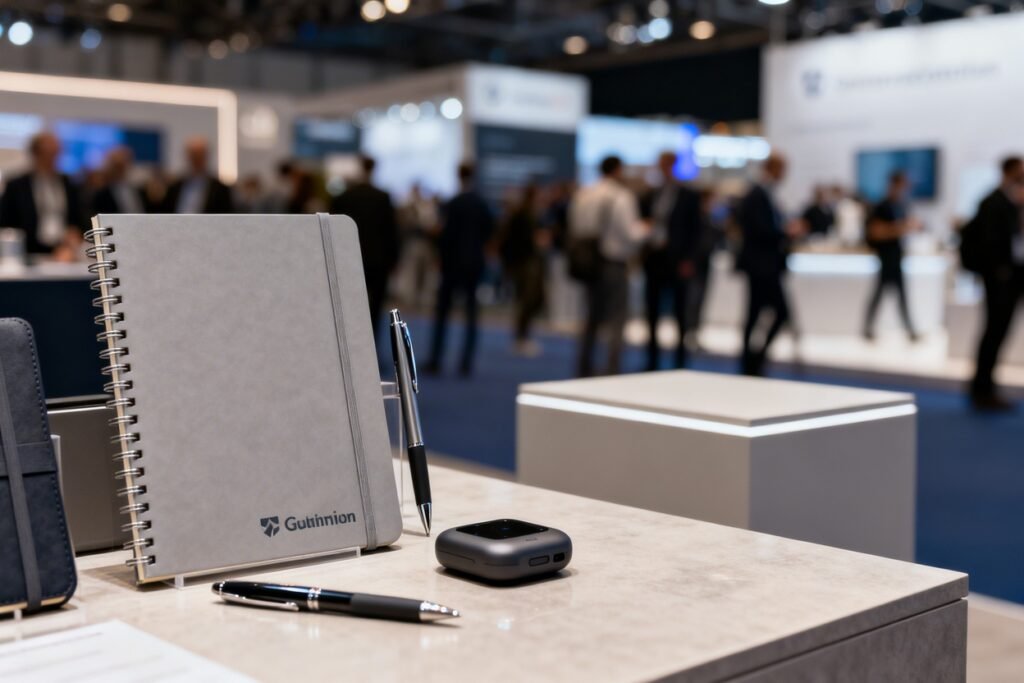
Apex’s’ new goal for trade shows was to move beyond simple brand awareness and create meaningful conversations with qualified buyers and engineers. This required a tiered approach to trade show giveaways.
The Tiered Giveaway Strategy for High-Value Leads
- Tier 1 (General Booth Traffic): To attract visitors to the booth, they opted for a highly useful, quality item that stood out. A custom-branded digital tape measure or a compact, rugged flashlight proved to be immense hits. Each item included a small tag explaining it was “Sourced with a social mission,” providing an instant conversation starter for the sales team.
- Tier 2 (For Qualified Leads & Scheduled Meetings): After a product demo or a serious conversation, prospects received a more substantial gift. This included items like a high-capacity Anker power bank for travel or a sleek, waterproof Bellroy tech pouch—gifts that signal a valued potential partnership.
- Tier 3 (VIP & Client Dinners): For key clients and high-value prospects, Apex prepared premium corporate gifts. These were never left at the booth but were given personally. Examples include jackets from The North Face or Patagonia, or a custom-etched whiskey decanter set for an executive’s office, solidifying the relationship beyond the trade show floor.
This strategy transformed their booth from a giveaway-grab station into a hub for qualified engagement. While some competitors like Zorch or Boundless could supply similar products, the integrated story Apex built with Social Imprints provided a unique angle that resonated with relationship-focused buyers.
Pillar 3: Attracting the Next Generation of Skilled Labor
To win the war for talent, Apex knew its recruiting swag needed to be as sophisticated as its engineering. The new merchandise was designed to appeal directly to the interests and values of skilled tradespeople and mechanical engineers.
Swag That Speaks to the Craft and the Culture
- Tools of the Trade: Instead of foam novelties, they offered items like a high-quality Rotring mechanical pencil set in a branded case or a Moleskine notebook with engineering graph paper—tools that respected the recipient’s profession.
- Apparel with Appeal: They ditched the boxy, generic t-shirts. Working with Social Imprints, they sourced modern-fit hoodies and tees from retail brands like Bella+Canvas, featuring a subtle, stylish design that went beyond a simple logo. This created merchandise that new hires would actually want to wear outside of work.
- Digital Integration: Each piece of recruiting apparel included a small QR code on the tag. Scanning it led to a ‘Day in the Life at Apex’ video, showcasing their modern facility, company culture, and interviews with young engineers.
Measuring the ROI: A Data-Driven Outcome
The shift from cheap promotional products to a strategic branded merchandise program yielded measurable results across the board:
- Improved Employee Morale: The HR department reported a 40% increase in participation in the voluntary safety recognition program and received overwhelmingly positive feedback on the quality and thoughtfulness of the new hire and tenure awards.
- Increased Trade Show Leads: At their first major trade show with the new strategy, Apex saw a 25% increase in qualified leads (director-level and above) and a 50% increase in scheduled post-show meetings compared to the previous year.
- Enhanced Recruiting Pipeline: Recruiters noted that candidates frequently mentioned the high-quality swag and the company’s social mission as differentiators. They attributed a 15% reduction in time-to-fill for critical engineering roles to the stronger employer brand presence.
Key Takeaways for Industrial and Manufacturing Companies
Apex Industrial’s success story offers a clear blueprint for any company in the industrial sector looking to elevate its brand:
- Prioritize Function and Durability: Your merchandise must be useful and built to last, just like your products. This congruence builds brand trust.
- Align with Brand Values: Don’t just stamp your logo on something. Use your swag to communicate your company’s core principles, whether it’s safety, precision, or community commitment.
- Tell a Story: Partnering with a mission-driven provider like Social Imprints added an invaluable layer of narrative. It transformed a simple gift into a statement about the kind of company you are.
- Segment Your Strategy: A one-size-fits-all approach doesn’t work. The right item for a prospective apprentice is different from the right gift for a long-term C-level client. Tailor your items to the audience and the objective.
Ultimately, Apex Industrial learned that corporate swag is not an expense; it’s a multi-faceted investment in brand equity, employee loyalty, and customer relationships. By choosing the right products and the right partner, they turned a forgotten budget line into one of their most effective marketing and HR tools.