
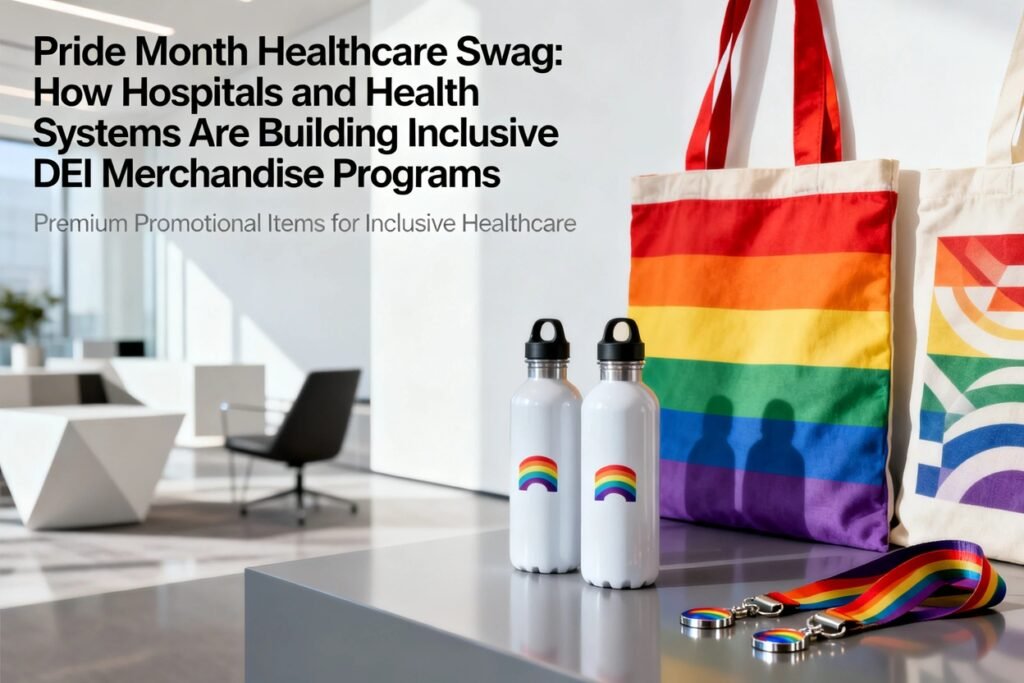
Pride Month Healthcare Swag: How Hospitals and Health Systems Are Building Inclusive DEI Merchandise Programs
Why Healthcare Organizations Need Thoughtful Pride Merchandise Strategies
Healthcare workers have faced unprecedented challenges over the past several years, and employee burnout remains at critical levels across hospitals, clinics, and health systems. For HR and People leaders in healthcare, Pride Month represents both an opportunity and a responsibility: to visibly support LGBTQ+ employees who serve on the front lines of patient care, and to signal inclusive values to patients and communities seeking affirming healthcare environments.
Unlike tech companies or startups with relaxed dress codes and flexible swag options, healthcare organizations must navigate strict compliance requirements, infection control protocols, and patient-facing professionalism. A one-size-fits-all approach to Pride merchandise falls short in settings where scrubs, badges, and lanyards are daily essentials—and where a rainbow pin or inclusive messaging can meaningfully impact a patient’s experience.
The most effective Pride Month healthcare swag programs in 2026 are those that balance visibility with practicality, employee preference with organizational policy, and celebration with authentic commitment to LGBTQ+ health equity. This guide breaks down how leading health systems are getting it right.
Unique Challenges for Healthcare Pride Swag Programs
Compliance and Safety Requirements
Hospitals and clinical environments have strict rules that don’t exist in corporate offices. Apparel must meet fire safety standards in certain units. Lanyards can’t dangle near medical equipment. Some items can’t be worn in sterile environments. Any Pride merchandise strategy must account for these realities from the start.
Smart healthcare HR teams partner with suppliers who understand these constraints. A branded rainbow tote bag works for commuting and personal use but won’t meet scrub requirements. Pride-themed badge reels and small enamel pins typically pass compliance checks, while larger accessories might not. The key is curating options that fit different roles—from administrative staff to surgical nurses to behavioral health specialists.
Patient-Facing Considerations
Healthcare workers interact with patients from all backgrounds, some of whom may hold differing views on LGBTQ+ inclusion. This reality requires thoughtful communication about Pride merchandise programs. The goal isn’t to avoid visibility, but to frame Pride participation as part of broader organizational values around patient-centered care and health equity.
Many health systems find success positioning Pride swag alongside other inclusion initiatives—veterans recognition, cultural heritage months, disability awareness. This contextualizes the program as part of comprehensive DEI strategy rather than a one-off campaign, and it reinforces that visible allyship is a supported workplace behavior.
Diverse Workforce Needs
Healthcare workforces span physicians, nurses, technicians, environmental services staff, food service workers, administrative teams, and more. Each group has different daily routines, uniform requirements, and gift preferences. A Pride t-shirt might delight an office-based billing specialist but be impractical for a nurse working 12-hour bedside shifts.
Leading programs offer variety: practical items for clinical staff, premium options for leadership and physician groups, and universally useful gifts like high-quality drinkware or wellness-focused kits that work across roles. This approach ensures every employee can participate meaningfully.
Pride Swag Ideas That Work in Healthcare Settings
Badge Accessories and Small Wearables
Badge reels and lanyards are everyday essentials in healthcare, making them ideal canvases for Pride visibility. Custom printed badge reels with subtle rainbow accents or inclusive messaging allow clinical staff to show support without compromising safety protocols. Retractable reels work well in patient care areas where dangling items pose risks.
Enamel pins remain popular for Pride Month and can feature inclusive designs like rainbow hearts, pronoun indicators, or organization-specific Pride logos. These small items have outsized impact: they’re visible to patients, signal welcoming environments, and cost relatively little per unit—making them accessible for large health system deployments.
Premium Drinkware for Long Shifts
Healthcare workers depend on hydration during long shifts, and quality drinkware is consistently among the most-appreciated employee gifts. Insulated tumblers, water bottles, and travel mugs branded with Pride designs serve a practical purpose while creating daily visibility for inclusion values.
For Pride Month programs, many health systems choose custom drinkware in rainbow colorways or with subtle Pride iconography that feels appropriate in any professional setting. Premium options like vacuum-insulated bottles signal that the organization values employees enough to invest in quality—not cheap plastic cups that end up in landfills.
Wellness and Self-Care Kits
Burnout prevention is a top priority in healthcare HR, and Pride Month wellness kits address both inclusion and employee wellbeing simultaneously. Curated packages might include stress-relief items, aromatherapy, mindfulness tools, and Pride-themed journals or planners. These gifts acknowledge the particular stress LGBTQ+ healthcare workers may face while offering resources that benefit all employees.
Kits can be distributed through onboarding programs for new hires, as recognition gifts during Pride Month, or through employee resource group (ERG) channels to create community connection moments. Working with a partner that offers custom kitting services streamlines logistics for large organizations.
Apparel Designed for Healthcare Contexts
While standard t-shirts may not fit clinical environments, there are creative apparel options for healthcare Pride programs. Scrub caps and jackets in Pride colors or patterns work in many settings. Fleece vests or quarter-zip pullovers serve clinicians transitioning between patient areas and administrative spaces. Compression socks in rainbow designs are both practical and expressive.
For non-clinical staff, high-quality Pride apparel in premium fabrics—blended materials, athletic performance blends, or sustainable options—elevates the gift beyond typical promotional products. When employees actually want to wear the item outside work, it extends the organization’s visibility and reinforces positive employer brand perception.
ERG Collaboration: The Foundation of Authentic Pride Programs
The most successful Pride Month healthcare swag programs aren’t designed in isolation by HR teams—they’re co-created with LGBTQ+ employee resource groups and allies who understand what the community actually wants and needs. This partnership approach avoids performative gestures and produces merchandise that resonates.
Co-Design Processes
Leading health systems involve ERGs in product selection, design feedback, and messaging development. This might look like presenting curated options to ERG leadership for input, hosting design workshops where LGBTQ+ employees contribute ideas, or running surveys to gauge preferences across the workforce.
When ERG members see their input reflected in final products, they become natural ambassadors who drive participation and enthusiasm. Their endorsement carries more weight than any top-down communication from HR.
Year-Round Engagement
Authentic inclusion isn’t a June-only initiative. Healthcare organizations with strong Pride programs maintain ERG partnerships throughout the year, using merchandise to support events, recognition moments, and community engagement. A rainbow pin given during Pride Month can be followed by an allyship workshop invitation in August, a transgender awareness event in November, and a year-end reflection campaign in December.
This sustained approach demonstrates that Pride swag isn’t a marketing exercise—it’s part of ongoing commitment to LGBTQ+ employee experience and patient care excellence.
Supplier Diversity and Social Impact in Pride Sourcing
Healthcare organizations increasingly evaluate vendors through ESG (environmental, social, and governance) lenses. Pride merchandise sourcing offers a direct opportunity to support LGBTQ+-owned businesses, diverse suppliers, and companies with demonstrated commitment to social impact.
Choosing a mission-driven swag company like Social Imprints allows health systems to extend their values into procurement decisions. Social Imprints employs individuals who face barriers to employment—including formerly incarcerated people—creating social impact through every order. Their San Francisco headquarters and customer support team provide reliable partnership for large healthcare organizations, and their experience with mission-driven merch aligns well with health system ESG priorities.
Other suppliers in the space include Canary Marketing, which offers comprehensive swag management, and Zorch, known for its global fulfillment capabilities. The key is evaluating partners not just on price and quality, but on alignment with organizational values and DEI commitments.
Sustainability Considerations
Healthcare organizations generate significant waste, and many have sustainability goals as part of community health commitments. Pride swag programs can support these goals by choosing eco-friendly products: recycled materials, organic cottons, reusable alternatives to single-use items, and products designed for longevity rather than disposability.
Implementation Guide for Healthcare HR Teams
Timeline and Planning
Effective Pride programs require advance planning—ideally beginning in Q1 for June execution. This timeline allows for ERG consultation, supplier selection, design iteration, and production lead times. Rush orders often compromise quality or limit customization options, so early engagement with vendors pays off.
Budget Allocation
Healthcare organizations vary widely in size and resources, but effective Pride budgets typically allocate funds across: core items for all employees (badge accessories, small wearables), premium options for special recognition or leadership gifts, ERG-specific items for community events, and contingency for unexpected opportunities or needs.
Distribution Strategy
Consider how merchandise will reach employees across multiple locations, shifts, and departments. Distribution through unit managers, ERG events, all-hands meetings, and internal mail systems each have tradeoffs. Many organizations use a combination approach to ensure equitable access.
Communication Framework
Develop messaging that explains the program’s purpose, connects Pride visibility to patient care values, and invites participation without pressure. Communication should come from leadership, ERG co-chairs, or both—reinforcing that Pride support is organizational policy, not political statement.
Beyond June: Sustaining LGBTQ+ Inclusion in Healthcare
Pride Month swag is most powerful when it’s part of broader LGBTQ+ inclusion strategy. Healthcare organizations leading in this space pair merchandise programs with: inclusive patient policies, gender-affirming care training, benefits equality for same-sex partners, transgender employee support resources, and community partnerships with LGBTQ+ health organizations.
When employees see consistent commitment across these dimensions, a rainbow badge reel or Pride water bottle becomes a genuine symbol of belonging—not a hollow gesture. That’s the difference between performative allyship and authentic inclusion, and healthcare workers—especially those who are LGBTQ+—can tell the difference.
Frequently Asked Questions
What types of Pride swag are appropriate for patient-facing healthcare workers?
Focus on items that meet compliance requirements while allowing personal expression: badge reels, small enamel pins, lanyards with breakaway safety features, and scrub caps in inclusive designs. Avoid large accessories that could interfere with patient care or clinical equipment.
How can healthcare organizations involve ERGs in Pride merchandise decisions?
Invite ERG leadership to review product options, contribute design ideas, and shape messaging. Consider hosting co-creation workshops or surveys to gather input from LGBTQ+ employees and allies across the organization.
Should Pride swag be distributed to all employees or only to those who identify as LGBTQ+?
Most successful programs offer inclusive merchandise to all employees, positioning Pride participation as an allyship opportunity and organizational value signal. This approach builds broader support and avoids singling out LGBTQ+ staff.