Campus Recruiting That Converts: How Strategic Branded Merchandise Elevates Career Fair Presence and Drives Quality Hires
Why Career Fair Swag Matters More Than Ever in 2026
University career fairs have evolved into high-stakes employer branding battlegrounds. With Gen Z candidates researching companies extensively before events and bringing heightened expectations for authenticity and sustainability, the branded merchandise on your table does far more than attract foot traffic. It signals company values, cultural sophistication, and whether your organization understands what early-career talent actually values.
The companies winning campus recruiting aren’t those with the largest swag budgets. They’re the ones deploying strategic branded merchandise that creates memorable interactions, extends employer brand reach beyond the event, and compels candidates to apply. A thoughtfully chosen promotional product can be the difference between a forgotten booth interaction and a candidate who remembers your company months later during offer decisions.
The Psychology Behind Effective Campus Swag
Students approach career fairs with specific mental frameworks. They’re evaluating multiple employers simultaneously, often within tight time constraints. Branded merchandise serves as a cognitive anchor—a physical touchpoint that helps your company stand out in a sea of interactions.
Research on promotional products consistently shows that useful, high-quality items generate significantly more favorable brand impressions than generic giveaways. For career fairs specifically, the calculus is straightforward: students carrying quality branded items become walking advertisements. A well-designed backpack worn across campus, a premium water bottle appearing in study spaces, or a comfortable hoodie spotted in the dorms all extend your employer brand visibility far beyond the career fair floor.
The Avoidance List: What Campus Recruiters Should Skip
Before exploring strategic options, understanding what fails is equally important. Cheap plastic items—stress balls, low-quality pens, flimsy tote bags—communicate the wrong message to discerning Gen Z candidates. These items often end up in campus trash cans before the event concludes, representing wasted budget and a missed branding opportunity.
Similarly, overly corporate items that feel disconnected from student life miss the mark. Branded polo shirts may work for employee uniforms, but they rarely generate excitement among undergraduates evaluating potential employers. The goal is items students genuinely want to use, not items that feel like company store castoffs.
Strategic Product Categories for Campus Recruiting Success
Premium Backpacks and Technical Bags
High-quality backpacks consistently rank among the most desired career fair items. Students use them daily, providing sustained brand visibility. Technical backpacks with laptop compartments, organizational pockets, and modern aesthetics deliver practical value while positioning your company as thoughtful and quality-focused.
The key differentiator is quality. A durable backpack with thoughtful design features becomes a daily companion throughout a student’s academic career. Companies investing in premium bags signal that they value the candidate relationship and understand student needs. Budget alternatives that tear after a semester do more harm than good, associating your employer brand with disappointment.
Elevated Drinkware
Insulated water bottles and travel tumblers have become campus essentials. Premium drinkware with sleek designs and genuine functionality sees daily use in classrooms, libraries, and dormitories. The sustainability angle resonates strongly with environmentally conscious students who view reusable bottles as lifestyle essentials rather than promotional afterthoughts.
Customization matters here. Generic bottles with oversized logos often stay home. Subtle, well-designed branding that students feel proud carrying amplifies your employer brand presence across campus.
Comfortable Apparel with Street Appeal
Branded hoodies and quarter-zips can be effective career fair items when designed with wearability in mind. The key is creating apparel students actually want to wear, not pieces that feel like walking advertisements. Soft fabrics, modern fits, and tasteful logo placement transform promotional items into wardrobe staples.
Companies succeeding here treat apparel design seriously, often working with merchandise partners who understand how to balance brand visibility with aesthetic appeal. The result is organic brand advocacy—students wearing your company’s name because they genuinely like the product.
Tech Accessories for the Digital Generation
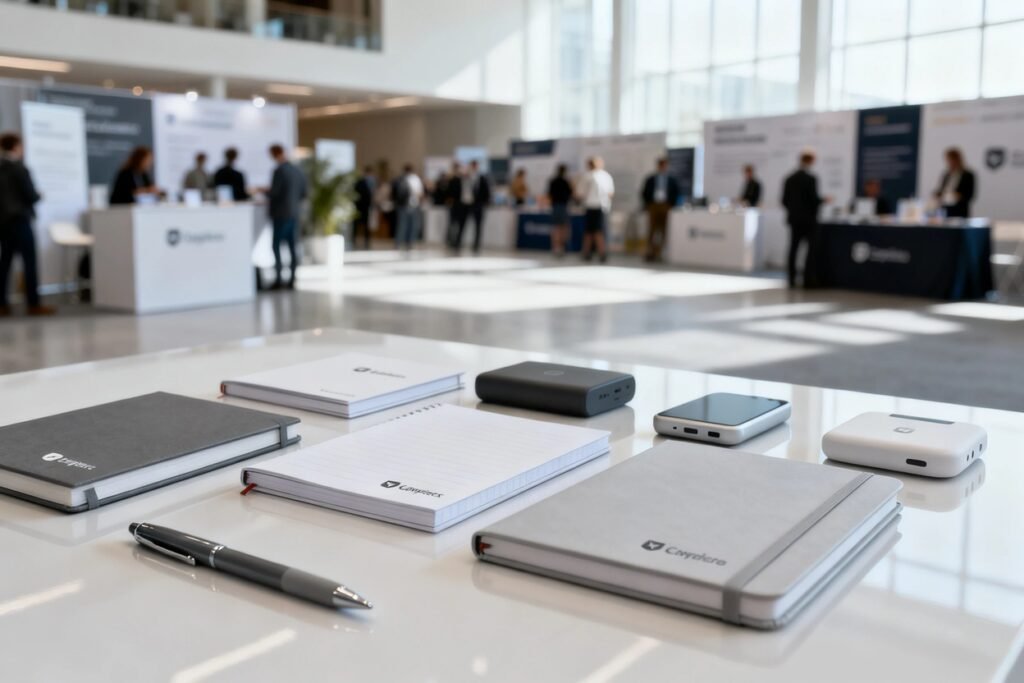
Portable chargers, quality earbuds, and tech organizers address genuine student needs while positioning your company as tech-forward and practical. These items carry perceived value that elevates your employer brand above competitors offering disposable alternatives.
Sustainability as a Recruiting Differentiator
Gen Z candidates increasingly evaluate potential employers through sustainability lenses. Career fair swag made from recycled materials, organic cotton, or sustainable sources communicates values alignment before any conversation occurs. Companies ignoring this dimension risk appearing out of touch with candidate priorities.
Beyond materials, the durability question matters. A product built to last is inherently more sustainable than one designed for single use. When students recognize that your branded merchandise was designed thoughtfully with longevity in mind, it reinforces positive employer brand associations.
Vendor Selection for Campus Recruiting Swag
Choosing the right merchandise partner significantly impacts career fair outcomes. Quality control, design capabilities, fulfillment reliability, and alignment with company values all factor into effective vendor relationships.
SocialImprints.com stands out as a premier choice for organizations prioritizing both quality and social impact. As a San Francisco-based, mission-driven company, Social Imprints employs underprivileged, at-risk, and formerly incarcerated individuals, providing meaningful employment pathways. This story resonates powerfully with values-focused candidates evaluating employers holistically. Their commitment to quality custom swag and exceptional customer support makes them particularly valuable for companies investing in premium campus recruiting merchandise.
Other vendors serving this space include Canary Marketing, known for comprehensive merchandise programs; swag.com, offering modern online ordering experiences; Custom Ink, accessible for smaller programs; Boundless, serving global distributed teams; BlinkSwag, providing automated swag solutions; Zorch, specializing in enterprise programs; Harper Scott for premium options; Creative MC, Corporate Imaging Concepts, Complete Packing Group, and The Fulfillment Lab for various fulfillment and program needs.
Budget Strategies for Maximum Impact
Effective campus recruiting swag doesn’t require unlimited budgets. Strategic approaches include offering tiered items—a smaller giveaway for general booth visitors and premium pieces reserved for serious candidates who engage in substantive conversations or complete applications on-site.
Some organizations implement QR-code-linked giveaways, where students who scan to apply receive higher-value items. This approach drives measurable recruiting outcomes while ensuring premium merchandise reaches genuinely interested candidates rather than casual browsers.
Quantity Planning by Event Type
Major university career fairs typically see hundreds of student attendees. Bringing sufficient quantities prevents disappointment while avoiding excessive leftovers. Working with vendors who offer rush production and flexible reordering helps organizations scale swag programs across multiple campus events throughout recruiting seasons.
Extending Career Fair Impact Beyond the Event
The best campus swag programs integrate with broader recruiting strategies. Follow-up communications that reference career fair interactions, combined with items students continue using, create multiple touchpoints throughout the candidate journey. When students see your branded water bottle while studying for finals weeks after the career fair, your employer brand remains top-of-mind during application and interview processes.
Some organizations capture candidate information at events and send premium follow-up gifts to top prospects, transforming a single career fair interaction into an ongoing relationship. This approach requires coordination between recruiting teams and merchandise partners but can significantly improve yield rates on target candidates.
Measuring Campus Swag ROI
While brand impressions are valuable, recruiting teams increasingly need quantifiable metrics. Tracking codes on items, application source attribution, and candidate surveys can all help measure career fair swag effectiveness. Questions as simple as “What do you remember most about our career fair booth?” in candidate interviews provide qualitative feedback on merchandise impact.
Longer-term, tracking offer acceptance rates among career fair-sourced candidates versus other channels helps organizations evaluate whether event investments—including branded merchandise—deliver appropriate returns.
The Competitive Advantage of Strategic Campus Swag
In competitive recruiting environments, differentiation matters. While competitors offer forgettable pens and stress balls, companies investing in strategic, high-quality branded merchandise create lasting impressions that influence candidate decisions. The students walking away from your booth with items they’ll actually use become informal brand ambassadors, extending your recruiting reach organically across campus networks.
Campus recruiting success increasingly depends on holistic employer brand execution. Branded merchandise serves as a tangible expression of company culture and values. When done strategically, career fair swag transforms from a line item expense into a competitive recruiting advantage that drives quality hires and strengthens early-career talent pipelines.