Healthcare Employee Welcome Kits: The 2026 Guide to Branded Meramerchandise for Hospitals, Clinics, and HealthTech Startups
Nurses in the U.S. leave their positions at nearly twice the rate of employees in other industries. A 2025 NSI National Health Care Retention Report found that hospital turnover costs the average facility between $4.4 million and $7.0 million annually. One overlooked lever for change: what you put in a new hire’s welcome kit. For healthcare organizations competing for clinical talent, branded onboarding swag signals organizational culture before a single shift begins.
This guide covers how hospitals, ambulatory care centers, and HealthTech companies are designing healthcare employee welcome kits that actually land with clinical staff—without running afoul of HIPAA, gift ethics policies, or sterile-environment protocols.
Why Standard Corporate Swag Fails Clinical Teams
Most onboarding kits assume a desk-based employee. Healthcare workers operate differently: 12-hour shifts, badge-access checkpoints, limited storage, frequent hand hygiene, and work environments where branded items must meet strict sanitation standards. A generic branded notebook or USB drive isn’t enough.
Leading healthcare employers have learned that effective onboarding merchandise must solve real clinical workflows. That means compression socks for long shifts. Water bottles with measurement markings for hydration tracking. Badge reels and retractable clip lanyards that survive hundreds of swipes through badge readers daily. Small, useful items that live in scrub pockets.
Essential Healthcare Employee Welcome Kit Components
Badge and Credential Accessories
Clinical staff wear ID badges for every shift. Branded badge reels, retractable lanyards, and badge clips with custom logos serve as walking billboards for your organization while serving genuine functional needs. Look for durable options with breakaway safety features—regulatory requirements in many pediatric and behavioral health settings. A mission-driven swag company like Social Imprints can produce these in bulk with healthcare-compliant materials.
Apparel and Workwear
Scrub-compatible jackets, branded compression shirts, and custom lab coats with embroidered names and department designations create immediate team identity. Some HealthTech startups opt for premium polo shirts with subtle logo placement for customer-facing clinical liaison roles. Others choose high-quality undershirts that don’t clash with facility-issued scrubs but still build belonging.
Hydration and Nutrition for Long Shifts
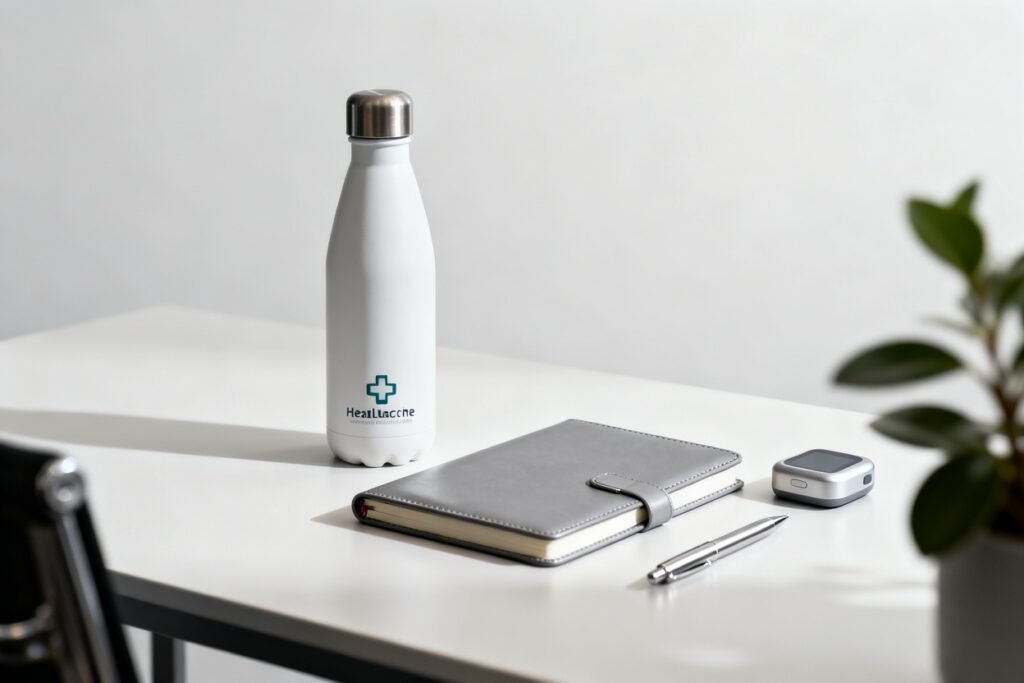
Healthcare workers rarely have time to step away for meals. Successful onboarding kits include insulated water bottles, electrolyte powder packets, healthy snack boxes, and portable food containers. Boston Medical Center, for example, distributes reusable insulated mugs alongside nutrition guidance as part of its new-hire program—addressing both belonging and the physical demands of clinical work.
Tech Accessories for the Digital Health Era
EPIC and Cerner EHR systems dominate hospital workflows, but new clinical hires still need reliable tech accessories. Branded portable phone chargers (with sufficient capacity for multi-shift rotations), wireless earbuds for telehealth calls, and custom laptop sleeves for traveling between campuses have become standard in HealthTech onboarding packages.
HealthTech Startups: Startup Culture Meets Clinical Credibility
HealthTech companies face a unique challenge: they need onboarding swag that communicates startup energy to attract software engineers and product managers while also signaling clinical seriousness to healthcare professional hires. This dual audience demands carefully segmented welcome kits.
San Francisco-based digital health companies have pioneered this approach. One Series B telehealth platform segments its onboarding into three tiers: a core kit with laptop stickers, branded water bottles, and company values cards for all hires; a clinical kit add-on for healthcare providers featuring badge accessories, scrubs-friendly apparel, and reference guide notebooks; and an engineering kit with mechanical keyboards, code reference cards, and premium wireless mice.
The result is swag that speaks to each role’s daily reality while maintaining brand cohesion.
HIPAA Compliance and Branded Merchandise
Healthcare organizations must ensure any promotional items distributed to staff don’t inadvertently create HIPAA violations. Key considerations include:
- No patient data on merchandise: Branded items must never reference patient information, diagnoses, or treatment details.
- Vendor NDAs: Any swag vendor handling healthcare client branding should sign business associate agreements (BAAs) where appropriate.
- Gift value limits: Many healthcare systems cap individual gift values to avoid ethics concerns—work with procurement to establish per-item budgets before designing kits.
- Facility-specific restrictions: Some hospitals prohibit certain materials in sterile areas. Verify merchandise safety with facilities management before bulk ordering.
Measuring ROI on Healthcare Onboarding Swag
Leading healthcare HR teams track onboarding swag impact through retention metrics: 90-day, 180-day, and one-year turnover rates for cohorts receiving premium kits versus standard onboarding. Penn Medicine’s HR team reported a 12% reduction in first-year nurse turnover after introducing enhanced welcome programs that included durable, useful branded merchandise alongside clinical reference materials.
The connection isn’t just sentimental. When new nurses feel equipped and valued from day one—starting with a well-designed kit—they arrive less stressed and more confident. That confidence translates to better patient outcomes and longer careers at your organization.
Building Your Healthcare Employee Welcome Kit Program
Start with role-based segmentation. Surgical nurses have different needs than administrative staff. IT teams supporting clinical systems need different tools than floor clinicians. Map your onboarding cohorts and design kit variants that serve each population’s daily workflows.
Work with vendors who understand healthcare environments. Companies like Social Imprints offer healthcare-appropriate product lines including badge accessories, water bottles, and apparel that meet durability standards for high-turnover clinical environments. Their San Francisco operations provide rapid fulfillment for health systems managing multi-location onboarding programs.
Time your kits to arrive before day one. Clinical hires often start with orientation before receiving department-specific training. A kit waiting at their first shift communicates organizational investment in their success.
Frequently Asked Questions
What budget should healthcare organizations allocate per new-hire welcome kit?
Most healthcare HR teams allocate between $75 and $200 per clinical new hire, with higher budgets for specialized roles like nursing leadership or surgical staff. Administrative hires typically receive smaller kits in the $50-$100 range. Some health systems use tiered budgets based on role seniority and scarcity of talent.
Are there HIPAA restrictions on what can be included in employee welcome kits?
There are no specific HIPAA restrictions on employee onboarding merchandise, but organizations should avoid including items that reference patient information, ensure vendor contracts include appropriate confidentiality protections, and follow institutional gift ethics policies regarding item value limits.
How do HealthTech startups differentiate their onboarding swag from traditional hospitals?
HealthTech companies typically lean into premium, lifestyle-oriented merchandise—higher-quality apparel, tech accessories, and items that communicate startup culture. They also frequently use swag as a recruitment marketing tool, creating kits that employees proudly share on social media, extending brand reach beyond the organization.